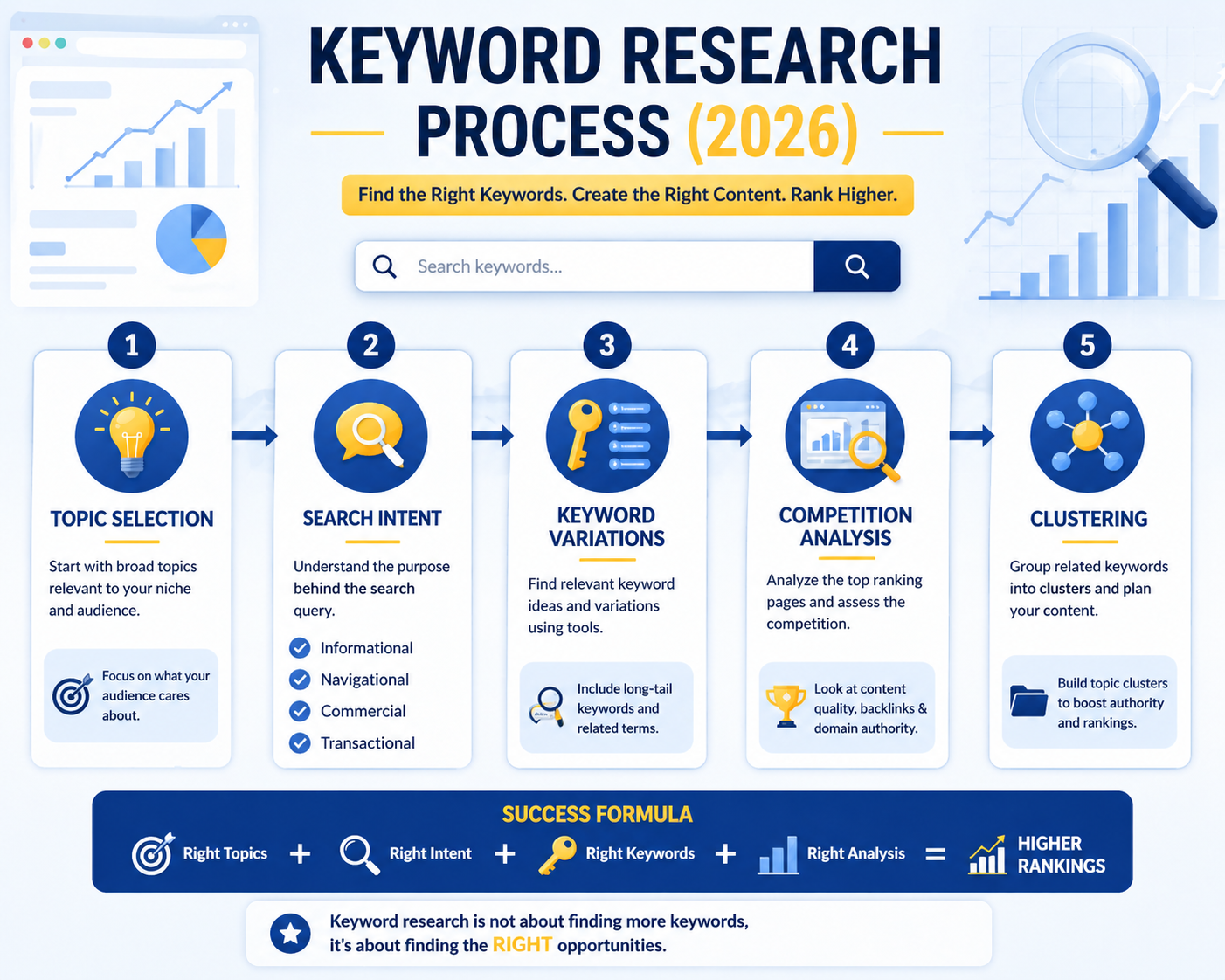
Keyword Research 2026
Most SEO strategies don’t fail because of poor execution.
They fail because they start with the wrong keywords.
Keyword research is not about finding the most popular terms.
It’s about finding the right opportunities—keywords you can realistically rank for and that bring meaningful traffic.
In 2026, keyword research is less about tools and more about understanding intent, competition, and relevance.
This guide shows you how to do it properly.
1. Start with Topics, Not Keywords
A common mistake is jumping straight into tools.
Instead, begin with:
👉 What topics does your audience care about?
Example:
If your site is about SEO:
- SEO basics
- Keyword research
- On-page SEO
- Technical SEO
Why this matters:
Google now evaluates topical authority, not just individual keywords.
Think in clusters, not isolated terms
2. Understand Search Intent
Every keyword reflects a user’s intention.
If you ignore this, you won’t rank.
Types of intent:
- Informational → “What is keyword research”
- Commercial → “Best keyword research tools”
- Transactional → “Buy SEO tool”
What to do:
- Google your keyword
- Study top results
- Match:
- Content type
- Format
- depth
👉 Keyword research without intent = wasted effort
3. Focus on Low-Competition Opportunities First
This is where most people go wrong.
They target:
- High volume
- Highly competitive keywords
…and never rank.
Instead:
Focus on:
- Long-tail keywords
- Specific queries
- Lower competition
Example:
Instead of:
- “SEO”
Target:
Smaller wins → build authority → then go bigger
4. Use Tools (But Don’t Depend on Them)
Tools are helpful—but they don’t replace thinking.
What tools can show:
- Search volume
- Keyword difficulty
- Variations
What they can’t:
- True intent
- Content quality required
- Real competition strength
Use tools to support decisions—not make them
5. Analyze the Competition (Critical Step)
Before targeting any keyword:
Look at the top 5 results
Ask:
- Are they strong websites?
- Is the content deep or shallow?
- Can you create something better?
What you’re really asking:
“Do I have a realistic chance here?”
6. Build Keyword Clusters
Instead of targeting one keyword per page:
Group related keywords
Example cluster:
- keyword research guide
- how to do keyword research
- keyword research steps
→ One strong page can target all
This improves:
- Rankings
- Authority
- Content efficiency
7. Prioritize Keywords That Drive Value
Not all traffic is useful.
Focus on keywords that:
- Solve real problems
- Attract the right audience
- Align with your content goals
👉 Traffic without value = vanity metric
🔹 8. Avoid Common Keyword Research Mistakes
- Chasing high volume only
- Ignoring intent
- Targeting keywords too competitive
- Creating separate pages for similar keywords
Simplicity + focus wins
9. Simple Keyword Research Process (Use This)
Step-by-step:
- Start with a topic
- Find keyword variations
- Check intent
- Analyze competition
- Select 1 primary + supporting keywords
Then create one strong page
10. FAQs
What is keyword research?
It’s the process of identifying search terms people use to find content.
How many keywords should I target per page?
One primary + a few related variations.
Do I need paid tools?
Not necessarily. You can start with free tools and manual research.
Conclusion
Keyword research is not about finding more keywords.
It’s about finding the right opportunities.
If you:
- Focus on intent
- Choose realistic keywords
- Build content around topics
You’ll start seeing consistent results.
Not immediately—but predictably.
Struggling to choose the right keywords?
Keyword research does not have to feel overwhelming.
The First-Time SEO Starter Kit includes a beginner-friendly keyword worksheet to help you identify keyword ideas, understand search intent, and choose one keyword to start with.
📘 Read SEO Best Practices 2026
🔍 Learn Keyword Research 2026
⚙️ Follow the On-Page SEO Checklist