CAN SMALL WEBSITES STILL RANK IN 2026?
If you own a small website, you may have wondered whether SEO is still worth the effort.
Large companies have bigger budgets, dedicated marketing teams, and thousands of pages.
AI-generated content seems to be everywhere.
So, can a small website still compete?
The answer is yes.
But the way small websites succeed has changed.
Google’s goal is to provide the most useful answer for a search query.
It does not rank websites simply because they are large.
A small website that publishes clear, helpful, and experience-based content can still outperform bigger competitors.
For example, a local bakery owner may create a better article about choosing custom cakes than a large recipe website.
A travel blogger may provide more useful insights about a destination than a generic travel portal.
Instead of trying to rank for broad terms such as:
“SEO”
Target narrower topics such as:
“SEO tips for first-time website owners”
or
“How to optimize images for a small business website.”
Smaller topics often have less competition and attract visitors who are looking for precise answers.
People trust content that feels authentic.
Share examples, screenshots, lessons learned, and practical advice.
Google increasingly values content that demonstrates experience and usefulness.
Rather than writing random articles, create groups of related content.
For example:
Connecting related articles helps search engines understand your expertise.
Many small websites overlook this opportunity.
Refreshing existing articles can often produce better results than publishing dozens of new posts.
Review older content regularly and improve information, examples, and internal links.
Avoid:
• Publishing hundreds of thin articles
• Copying content from competitors
• Chasing highly competitive keywords too early
• Expecting results within a few weeks
SEO remains a long-term strategy.
Progress may seem slow at first, but steady improvements can compound over time.
Small websites still have opportunities to rank in 2026.
The websites that succeed are not always the largest.
They are often the ones that understand their audience, answer questions clearly, and publish consistently.
You do not need thousands of pages.
You need content that genuinely helps people.
Start small.
Improve steadily.
And remember that every established website was once a brand-new website with no visitors.
• SEO for First-Time Website Owners: Where to Start
• Can I Do SEO Myself Without Hiring an Expert?
• What Is the Difference Between SEO and Paid Ads?
• How Many Blog Posts Do I Need to Rank on Google?
Download the Free SEO Quick Start Guide and learn how to improve your website one step at a time.
📘 Read SEO Best Practices 2026
🔍 Learn Keyword Research 2026
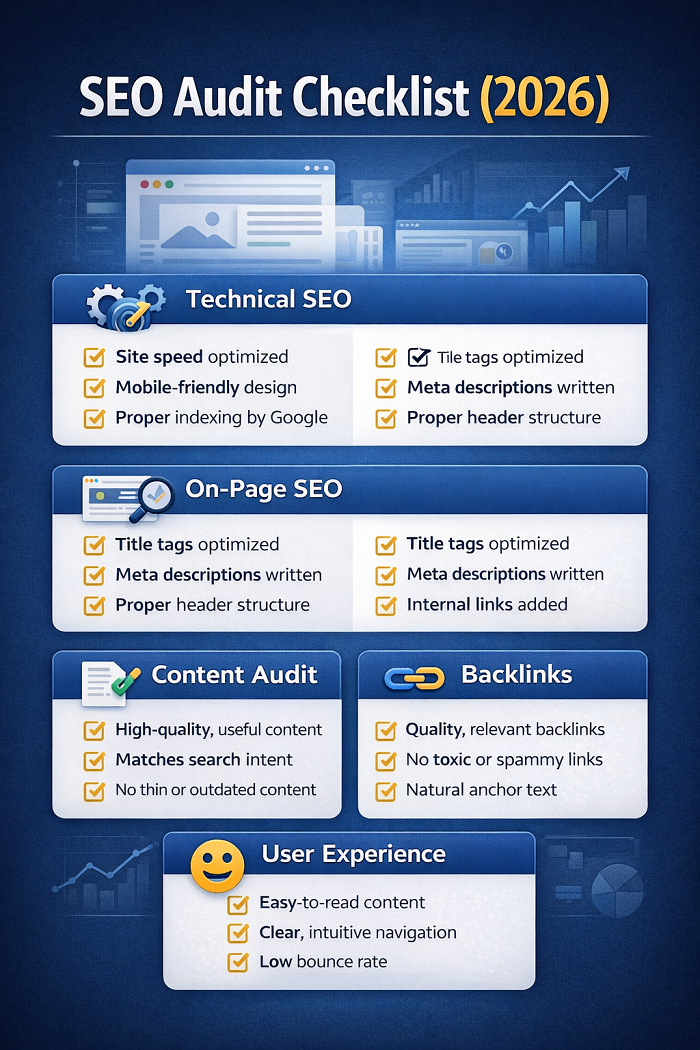
⚙️ Follow the On-Page SEO Checklist
In the last lesson, we looked at how pages fit together within a website. But…
In the first lesson, we looked at a simple question: Can someone find their way…
A sudden ranking drop can make almost any website owner want to start fixing things…
You can have useful content, good products or services, and pages you have spent hours…
Why Is My Website Getting No Traffic? 5 Things to Check First You’ve built your…
Google rolled out another spam update in August 2026. If you own a small website,…
This website uses cookies.